Producers must employ a variety of tricks to score the almighty hit. They’ll lay back and give the artist every creative chance — at first. But if the magic fails to manifest, then it’s time to lie, cheat, steal, and do whatever it takes. You’ve got to be bold to get that record coated in gold. Feelings can be fixed, but flops…..flops are forever.
Norman Petty owned a studio in Clovis, New Mexico and gained fame in the late 50’s as Buddy Holly’s producer. He also scored bestselling singles with Roy Orbison and Buddy Knox, and possessed a particular touch with recording instrumental hits. One of the non-vocal bands he helped take into the charts was a local group known as The Fireballs, who found themselves with three moderate hits through 1961 but spent most of 1962 doing session work at Petty’s studio.
That same year, another member of the Petty posse named Keith McCormack, former guitarist for The String-A-Longs (a group who had a massive instrumental hit with the Petty-produced “Wheels” in 1961 but had recently broken up), kept himself busy by writing songs. He was hanging out at his aunt’s house when he got the idea for a song called “Sugar Shack,” and wrote the bulk of it in about five minutes. But he couldn’t remember the name of those tight, stretchy pants currently in fashion so he had to ask his Aunt Faye, who was able to provide him with the word “leotard.” She helped him with a couple more lines and he later gave her a songwriting credit.
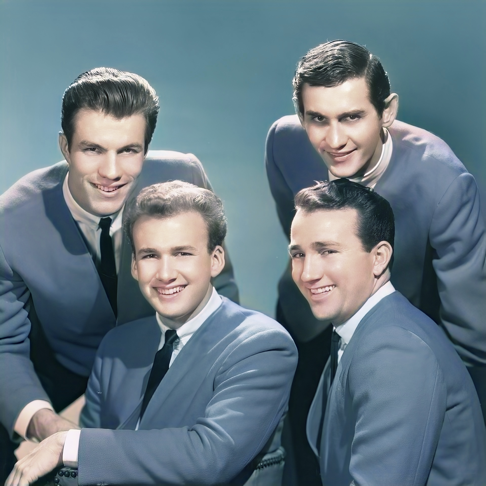
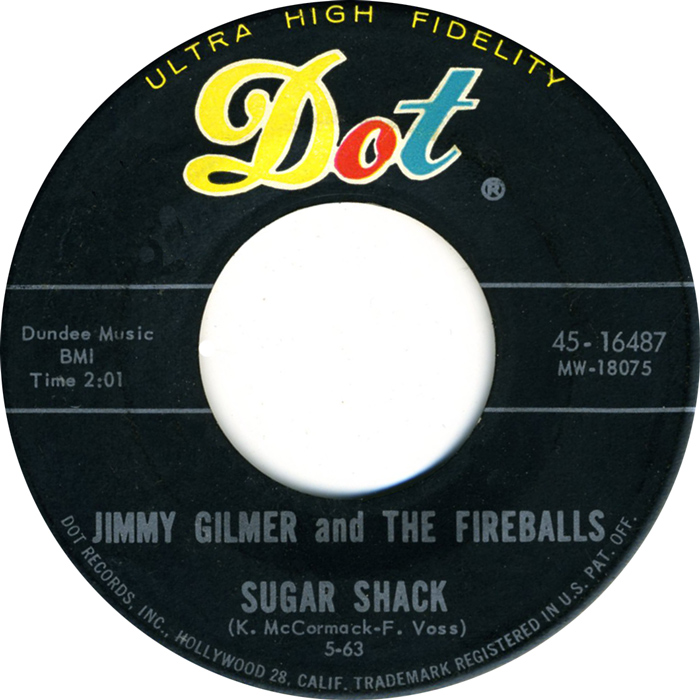
McCormack thought it was a silly song, but still recorded a demo at the Clovis studio. Petty must have believed “Sugar Shack” had potential because soon afterwards McCormack took a trip to California and — without his knowledge — Petty gave the song to The Fireballs to record with session singer Jimmy Gilmer taking the lead vocal. It sounded great with Gilmer’s relaxed twang and the unique effect on the lead guitar riff, but Petty knew some ineffable ingredient was missing. On the other hand, he also knew The Fireballs wouldn’t take kindly to what he had in mind as an addition. This would require subterfuge.
Without telling the band, Petty added a series of flute-y, fairground keyboard riffs throughout the song. As expected, The Fireballs hated it. They were a serious rock & roll band and now here was this cutesy, Pied Piper, merry-go-round sound slathered all over their work. And what’s more, Petty had gone behind their backs.
Then the single sold over one million copies in its first six months.
All of a sudden the band decided that maaaaybe it was okay after all. And Aunt Faye — with her songwriting credit — was probably pretty jazzed about knowing the word “leotard.”
Released in May of 1963, “Sugar Shack” took all summer to build up steam, slowly getting picked up by one small radio station after another, but eventually became the bestselling song of the year, and easily reached #1 that fall when the single swept across the nation. Of course, this kind of success is difficult to replicate and everyone involved returned to normalcy with only a few more hits here and there over the ensuing years, but they would always have that sweetest of moments. Hurt feelings were fixed, because #1 songs…..#1 songs are forever.
So drink a lot of coffee and spend a little cash … with Jimmy Gilmer and The Fireballs.
 1 2 3 o' clock 4 o' clock Rock
Go Aunt Faye! Nice that she was given a songwriting credit.
The song really wouldn’t be the same without the flute-y hooks.
A lot of songwriters wouldn’t have done that for such a small contribution so I’m glad that happened. She probably made a fortune on it! And those flute-y hooks definitely improve the song. Those could get stuck in your head even if this was an instrumental.
Completely agree!
Terrific backstory! This is such a great, fun song.
Thanks! This is one I used to love hearing on the radio as a kid. Not during its original release, of course!
Fun song and fabulous backstory. Thanks Houston!
You’re welcome! I’m glad you enjoyed it. 1963 was a great year for music.