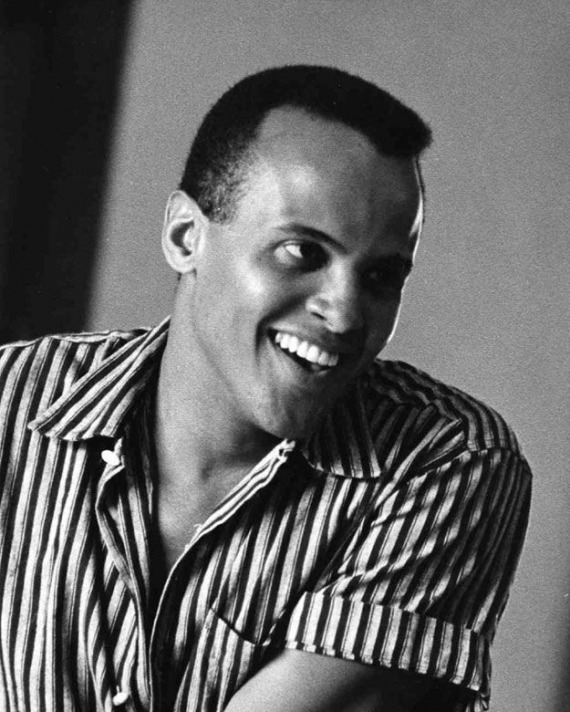
Before “World Music” became a popular musical genre on its own, there was Harry Belafonte.
Belafonte was born in Harlem, New York in 1927 to parents of Jamaican descent, and later lived with his grandmother back in Jamaica for eight years, absorbing the music and rhythms of the island, before moving back to New York as a teen. His dream of becoming an actor started promisingly when he was accepted to a prestigious drama class, where his fellow students included Marlon Brando and Sidney Poitier. But, like Barbra Streisand about a decade later, he found it difficult to secure acting gigs, and so turned to singing in nightclubs to pay the bills.
Belafonte enjoyed performing an audience-pleasing mix of musical theater numbers, pop, blues, humorous songs, and especially, traditional folk from around the world. It didn’t take him long to sign a record deal with RCA, although it took another three years before he achieved any real success. But when he did, the whole world took notice. Paying the bills would no longer be a problem.
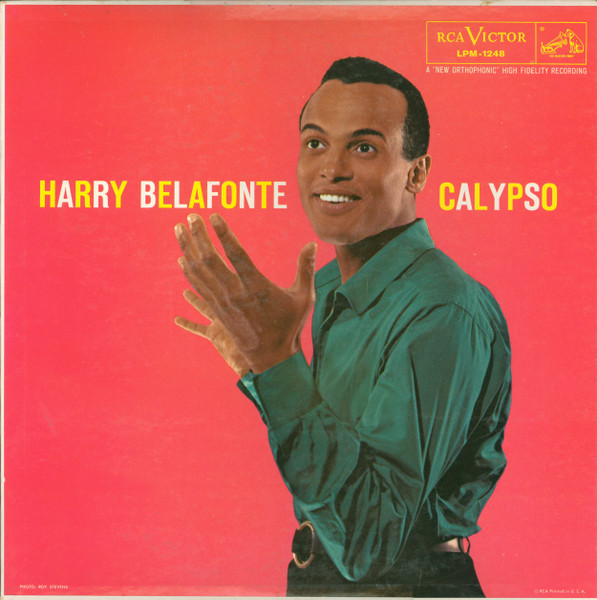
In 1956, Belafonte released two albums. His eponymous sophomore effort reached #1, but the follow-up, Calypso, not only shot straight to #1, it stayed there for an incredible eight months, becoming the first long-playing album to sell over one million copies, and launching Harry Belafonte onto the worldwide stage. His music also kicked off a calypso trend in both music, film, and popular culture that would last for years, still going strong in 1962, prominently featured in Dr. No, the first James Bond film.
Belafonte’s cultural significance over the ensuing decades was less about the pop charts and more about his countless appearances on public television and as a goodwill ambassador across the globe, both for the performing arts and for civil rights.
So jump in the line, rock your body in time. Here’s all you need to know:
Very Best of Harry Belafonte An excellent single-disc compilation which covers all the big hits. Conveniently, there are also two-disc and three-disc sets in print depending on how much you want to delve. Come Mr. Tallyman, tally these bananas!
Now, if you’re talking to a fellow music geek and the topic of Harry Belafonte should arise, you will be fine and know all you need to if the least you’re familiar with are those big songs; however, if you want to explore further, his two live albums capturing appearances at Carnegie Hall are fantastic, not only for the performances, but also for the audience reactions and for an insight into the warm-hearted spirit and personality of Belafonte.
Let’s thrown in some Carnegie Hall:
This final selection is one of my favorite songs ever, by anyone. Don’t know why, it just hits me right. It probably helps to have grown up as a military brat. Also, live performances are always fun when mistakes enhance the proceedings — the singers almost lose it towards the end, but just manage to hold on:
 1 2 3 o' clock 4 o' clock Rock
Such an iconic voice and repertoire!
Did you move around a lot growing up in a military family?
Oh yes, moved around quite a bit! Europe twice, Asia twice, and East, West and Central US. I loved it.
Oh wow! I can only imagine. What a horizon-broadening way to grow up!
Aah yes. He’s always been a favourite of mine, particularly the Tallyman song. Hope you’re having a wonderful weekend, Houston.
A favorite of mine, too. My parents had a couple of his albums and he used to appear on PBS quite frequently when I was a child. And with The Muppets.
It finally snowed significantly here in Vermont, so I’m enjoying a warm and cozy weekend indoors. Hope you’re having a wonderful weekend, whether indoors or out!
I bet your daughter is enjoying the snow!!
She is! Her class goes on a couple of ski trips every year and she loves it.
Excellent! I love a childhood well lived. ❤️
Who can resist the charm and warm voice of Harry Belafonte? He’s always been a favorite but I’ve never heard that last song. What a treat! Thanks for sharing that with us. One of the most attractive attributes of a person is a sense of humor and the ability to laugh at themselves, especially when they screw up in front of an audience. Brilliant recording, Houston! I wonder …. are you familiar with this version of George Harrison’s Miss O’Dell? It’s absolutely charming and contagious!
I’ve always loved the warmth and humor that Belafonte conveys. It always makes me feel good.
I actually have that version of Miss O’Dell! It’s on one of the first Beatles bootlegs I ever bought, but I haven’t heard it in ages. I love that George keeps going despite the laughter even though he must know that take won’t be released. It was also fun to watch a whole video of George clips. Thanks for sharing that!
My pleasure, Houston. Laughter is so much better when shared!