It’s a rare occurrence to have one legendary guitarist pass through the ranks of your band, let alone two. But three? C’mon, what are the chances?
Well, better than you would think.
Let’s talk about some Bluesbreakers!

When Eric Clapton left The Yardbirds in 1965, he shunned the pop game, desiring to play nothing but down and dirty, authentic blues like his American heroes. Fortunately, John Mayall, a singer, guitarist, and harmonica player who’d been hard at work on the London blues scene for years with little to show for it, had recently lost his lead guitar player. The two joined forces, but after one year and one album, Clapton then decided he wanted to stretch out and play psychedelic blues and left to form Cream.
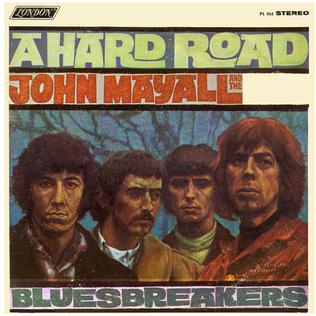
So Mayall now faced the same question posed to The Yardbirds the previous year: how do you replace a guitarist whose fans paint graffiti around town labeling him as “God”? No problem, said Mayall. During Clapton’s tenure he missed a few gigs and Mayall brought in a young musician named Peter Green as a substitute. Green performed so well he scored himself the first call after Clapton’s defection. The two joined forces, but after one year and one album, Green and two other Bluesbreakers decided they wanted to play their own brand of blues and left to form Fleetwood Mac.

So how do you replace a guitarist who you thought actually might have been better than the one labeled “God”? No problem, said Mayall. A 17-year old kid named Mick Taylor had recently jammed with the band during a concert one night, and when Green departed, Mayall placed a Guitarist Wanted ad in the paper, and the kid answered. The two joined forces, but after three years and three albums, Taylor decided he wanted to play the blues with the biggest rock band on the planet and left to join The Rolling Stones.
Throughout his career, Mayall consistently found it difficult to keep band members in his band (he employed about 30 in the 1960’s alone). But when he needed a new one, he sure exhibited good taste.
It’s a hard road, but put a smile on your face and dry away your tears. Here’s the least you need to know:
Blues Breakers with Eric Clapton (1966) Clapton plays straightforward blues. You first have to learn the rules so you can then break them.
A Hard Road (1967) Green studies the blueprint for how to lead your own band. And then does so.
Crusade (1967) Taylor sharpens his chops, taking his first steps from being a boy who plays the blues to a man who plays the blues.
 1 2 3 o' clock 4 o' clock Rock
John Mayall has always been on my favourites. Nice to be reminded of him, Houston.
It’s unfortunate that as time goes by John Mayall is mostly remembered only for that album with Clapton. He has a lot of great music after that.