The oft-repeated quote that states, “Good artists copy, but great artists steal” has been attributed to numerous people over the last century, most often Pablo Picasso. However, it actually appears to originate with T.S. Eliot, who wrote, “Immature poets imitate; mature poets steal; bad poets deface what they take, and good poets make it into something better, or at least something different. The good poet welds his theft into a whole of feeling which is unique, utterly different than that from which it is torn.”
Not quite as pithy as what it became, but you get the idea.
People have written “Variations on a Theme by…” for as long as music has been recorded with ink and paper, and it continued in the rock & roll era, especially with guitar riffs. You take the original and twist it into your own thing.
So who’s stealing what in this case?
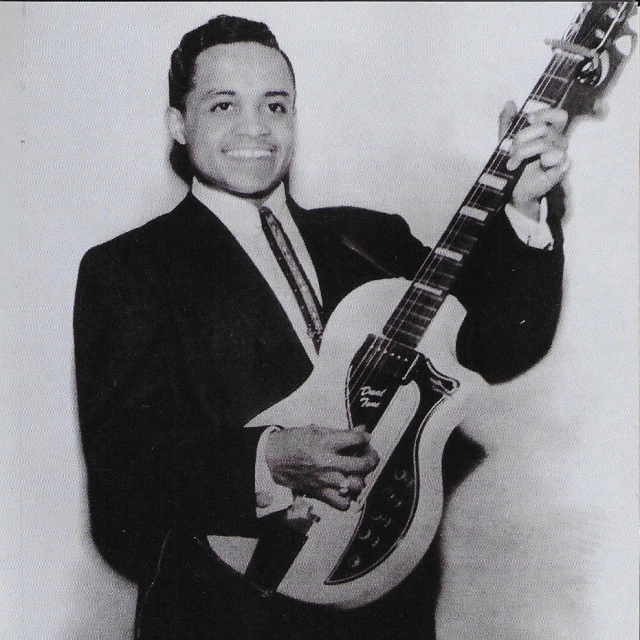
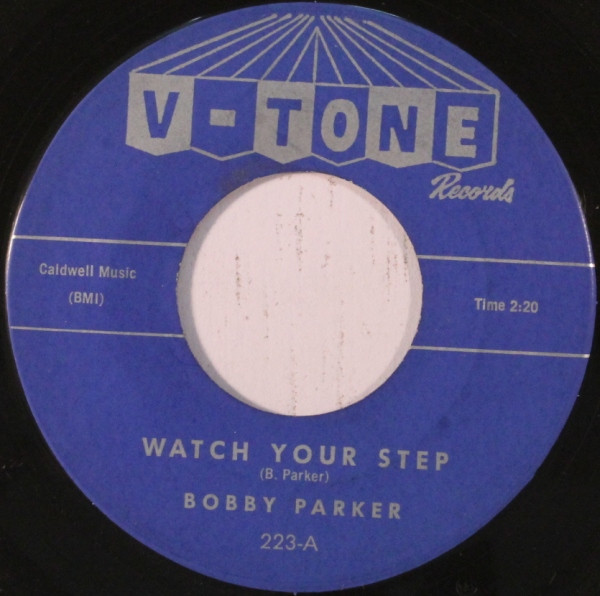
Bobby Parker primarily made his living as a guitarist for such stars as Bo Diddley, Sam Cooke, Jackie Wilson, and many others in the 50s and 60s. But he also recorded just over half a dozen solo singles during this period, only one of which could be considered a hit, albeit a very minor one. “Watch Your Step” tiptoed up to #51 on the US chart in 1961, but it proved much more popular over in England where burgeoning rock ‘n’ rollers picked up obscure import singles from sailors docking in Liverpool and other ports. Many songs barely known by US audiences found their way into the repertoires of aspiring UK bands in this manner.
One such band was The Beatles.
Anyone who’s read any books on The Beatles over the last 50 years will have seen “Watch Your Step” mentioned in just about all of them. Anytime John Lennon’s “I Feel Fine” and “Day Tripper” come up, they will immediately be followed by mention of Bobby Parker’s song and how Lennon took inspiration from it. For “I Feel Fine” the group also adopted the same Ray Charles “What’d I Say” beat as Parker’s song, but the added note of distortion at the beginning of the track and the embellishment of the riff transformed it into The Beatles’ own thing. And then “Day Tripper” simply took the riff and rocked it up like never before.
(Lennon wasn’t alone with his thieving. Jimmy Page, himself a purveyor of intricate guitar riffs, was also a big fan of Parker’s playing and listening to this song led to Zeppelin’s “Moby Dick.”)
Prior to the age of internet streaming, “Watch Your Step” remained a mystery to all those Beatles readers who saw the title in print. It wasn’t a hit in its own time and also never appeared on oldies radio stations, so it wasn’t easy to hear it — but we all heard the creativity its theft inspired.
T.S. Eliot would be proud.
 1 2 3 o' clock 4 o' clock Rock
Really!? I had no idea. That’s amazing. The similarities are so clear.
The first book I ever read about the Beatles, back in the late 80s, mentioned this song (and so did every subsequent book), but it was probably another 15 years before I actually heard it. To his credit, Lennon always acknowledged the theft, giving Parker his due — something not every artist did. It’s a fun little song!