
Our recent posts from the 1980s have been missing a crucial element that helped to define the music of that decade. What element? Saxophones!
Let’s remedy that.
Saxophones established themselves as the predominant instrument for soloing in the 1950s, but as rock & roll grew in popularity, the electric guitar eventually replaced the shiny, golden woodwind. In the 1960s, saxophones were increasingly used as part of an ensemble with other jazz or orchestral instruments, but the 50s revival that took place in the 70s saw a comeback for solo sax spotlights. More often than not it was still a honking, dirty, rock sound, but as pop moved into the 80s, the sax took on a smoother, softer, more lyrical flavor in a genre known as sophisti-pop.
Sophisti-pop took elements of jazz, soul, and New Wave and turned out a clean, radio-ready sound. And one of those bands who purveyed the polished pop was the oddly named Haircut One Hundred.
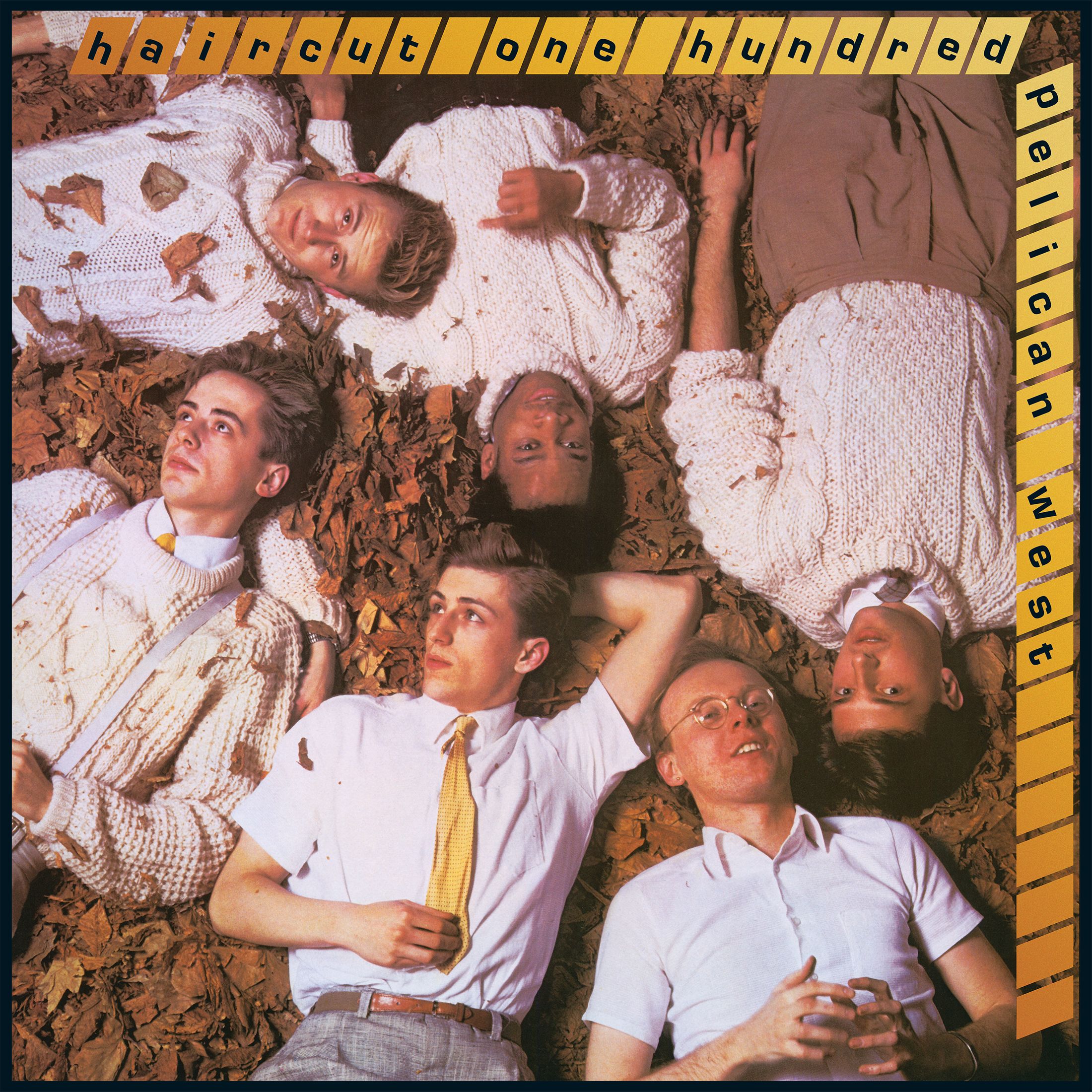
Haircut One Hundred formed in London in 1980, choosing the name because, when tossing around possibilities, it’s the one all the members found funniest. They recorded a few demos and Arista Records jumped up to sign the group. Understandable really, since Haircut One Hundred were the antithesis of the angry punk and gloomy post-punk bands from recent years in the UK. These were smiling young men who sported the newly popular “preppie” look — khaki slacks, tucked in button-down shirts, baggy sweaters. Sophisticated.
Danger always sells, but “the boy next door” can sell, too.
Haircut One Hundred recorded their debut album, Pelican West, with producer Bob Sargeant, who had spent the previous few years working with those raw, dark, punk and post-punk bands, but had recently found pop success with The English Beat. A talented musician himself, when the band brought in a song called “Love Plus One,” Sargeant played marimbas on the track, an unusual color for a pop record, although not for jazz. And that jazzy element also brought the smooth sax sound to the forefront in the song’s introduction, along with a double-tracked solo. The guitars only provided rhythm — a shift in focus from the previous two decades.
Released as a single in January of 1982, “Love Plus One” added up to a #3 hit in the UK and provided the band with their only US Top 40 appearance. Unfortunately, lead singer and songwriter, Nick Heyward, left for a solo career and the band never recovered, breaking up a couple of years after their big success.
Now it’s down to the lake, I fear … with Haircut One Hundred.
 1 2 3 o' clock 4 o' clock Rock