Sometimes record companies (and everyone else in the music biz) make baffling decisions.
John Howard first laid hands on a piano in the late 1950s, around the age of five, imitating his father who played the old Joanna in a number of jazz bands in the north of England. He took lessons for the next decade, learning classical piano while absorbing the jazz influence from his dad. Unsurprisingly for a child in a musical family, he developed an early love for radio and pop singles, particularly those with unusual sounds, like the productions of Phil Spector and Joe Meek, the drama-pop of Roy Orbison and Cilla Black, and later the electric Dylan and the eclectic Beatles.
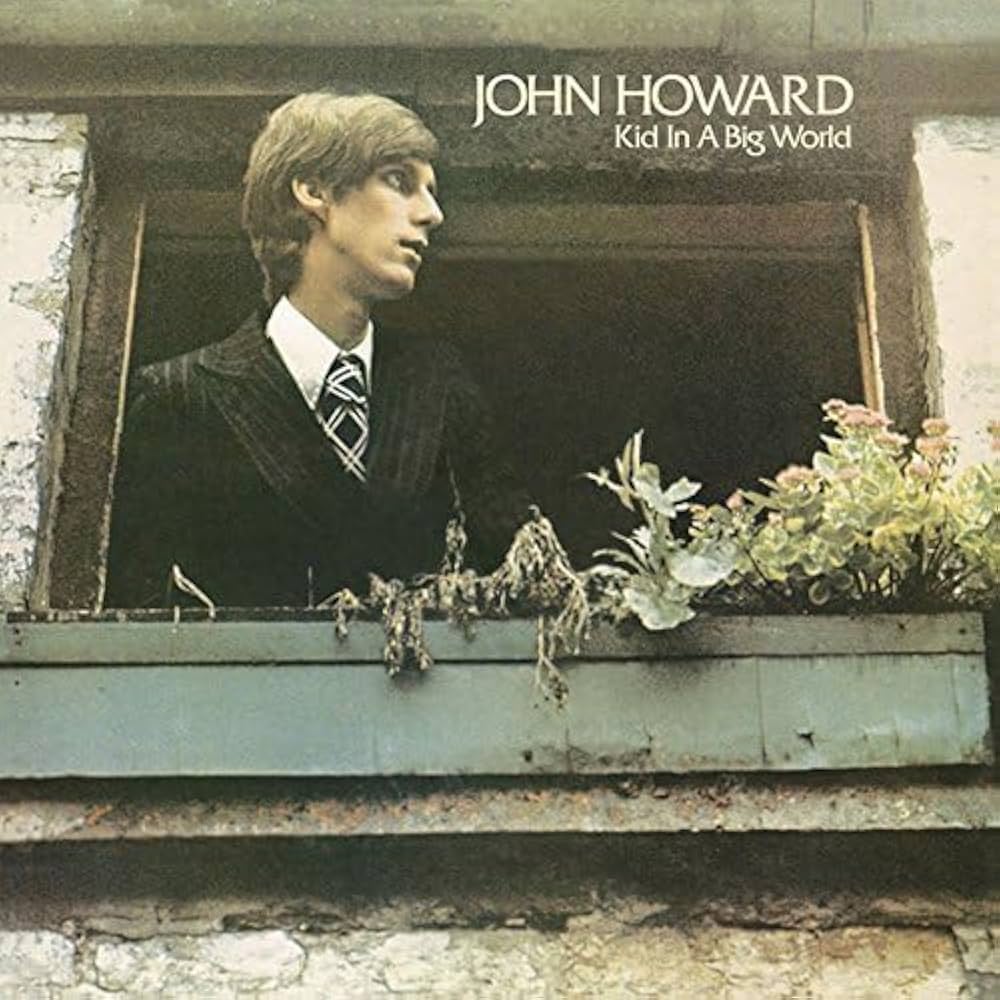
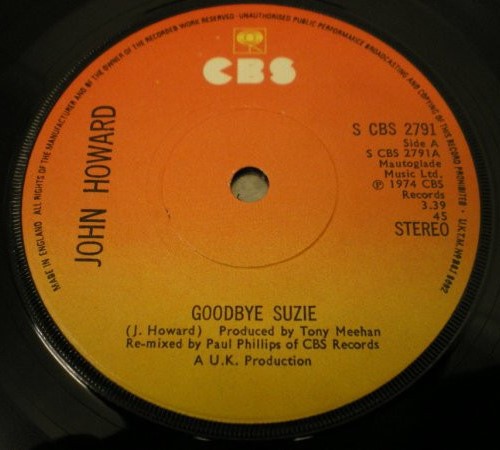
When the singer/songwriter movement and the glitter of glam rose to prominence in the early 70s, Howard took it all in and began writing his own songs. CBS Records heard his demo tape and, after a long period of hemming and hawing, finally signed Howard to a deal, sending him to Abbey Road Studios with former Shadows’ drummer Tony Meehan in the producer’s chair. Meehan’s arrangements didn’t always fit Howard’s songs and he frequently asked the singer to make changes, but one song he improved through a little simplifying was a soaring, Bowie-esque ballad called “Goodbye Suzie.”
When released as a single in 1974, “Goodbye Suzie” received airplay on pirate radio, but the main UK stations refused to play it because they deemed the song too depressing (which seems odd considering plenty of depressing songs were played at the time — “Seasons In The Sun”! Also, “Suicide Is Painless (Theme from MASH)” reached #1 in the UK a few years later! — but then you remember they banned Bobby Pickett’s Halloween novelty “Monster Mash” for being too morbid and maybe it makes a little more sense.)
Like its main character, the “Goodbye Suzie” single sank. (Too morbid? Please don’t ban this post.)
After the failure of “Goodbye Suzie” and its follow-up single, CBS Records turned a cold shoulder towards Howard. He submitted demos for his second album and nobody responded. His manager eventually cornered someone from CBS who told him they had no interest in releasing those songs (despite the fact that they were in a similar vein to his first batch, which CBS had loved, and arguably even stronger overall). They wanted hits.
If Howard wanted to keep recording, he would have to write new songs, those songs would have to be radio-friendly, and he would have to work with a disco producer named Biddu who had recently helmed Carl Douglas’s hit “Kung Fu Fighting.” Howard agreed to the terms, wrote and recorded an entire album, and CBS rejected that one, too.
It’s difficult to know to what degree homophobia may have played a part (particularly with radio) and how much was mismanagement by CBS. Howard was gay and people constantly directed him to be less effeminate — in person, in photographs, on stage, on TV. He encountered subtle and overt resistance both at CBS and at Radio One. Feeling restricted, unable to be himself, and unable to break through commercially, Howard abandoned recording and (somewhat surprisingly) went to work for a record company, spending most of the 80s and 90s producing compilations.
His debut album was rediscovered and reissued in 2003, followed shortly afterwards by the first appearance of his two shelved albums. The renewed interest in Howard’s work, along with the success of recent artists like Rufus Wainwright who were openly gay and thriving, inspired him to return to the piano and to songwriting. He had a lot of stored-up creativity to let out, as evidenced by the more than a dozen albums he has released in the last 20 years.
In 2007, Howard recorded a song called “My Beautiful Days” about the contrast between the way back when, just beginning his singing career, and the now — the beauty of youth (but with shackles) versus the beauty of finally being free.
 1 2 3 o' clock 4 o' clock Rock
Yes. What a beautiful voice and song.