Sometimes it’s all or nothing.
The origins of The New York Dolls lie in two pairs of schoolfriends who formed bands in the late 1960s. Guitarist Johnny Thunders joined one band, and after they dissolved, joined the second. As members in the second group left they were replaced with the original pair from the first band. (I can make a diagram later). In 1971, this band of rebellious rockers became known as The New York Dolls, named after the New York Doll Hospital, an establishment across the street from where guitarist Sylvain Sylvain used to work.
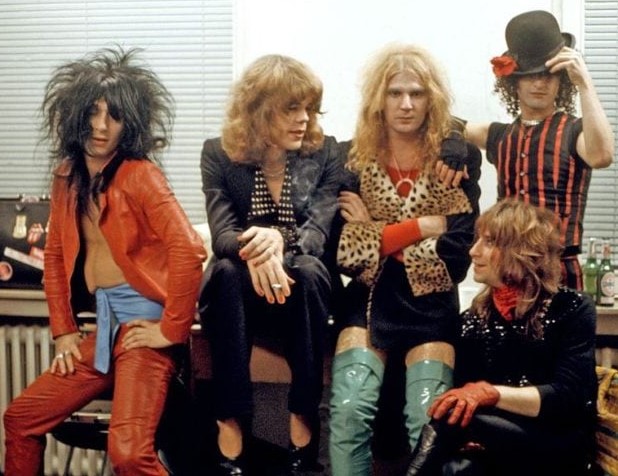
The Dolls gained notoriety for their often amateurish — though energetic — raw, rock & roll (pre-dating punk by years) and their penchant for dressing in women’s clothing and makeup (pre-dating glam metal by a decade and inspiring fellow New Yorkers KISS). Respected music journalist turned music executive Paul Nelson spent months trying to convince his boss at Mercury Records to sign the band. The boss thought he was insane. Even though Nelson was threatened with termination if he ever brought up the subject again, he tried one last time and Mercury signed the band in 1972.
The next step was to capture the glorious mess of their live show on a record. It seemed counterintuitive given his love of Philly soul and pop, but Todd Rundgren was a canny choice to produce The New York Dolls’ first record: he had started out in a garage band himself, and he was a disciplinarian in the studio. If anyone could rein in The Dolls while capturing their raw sound, it was Rundgren.

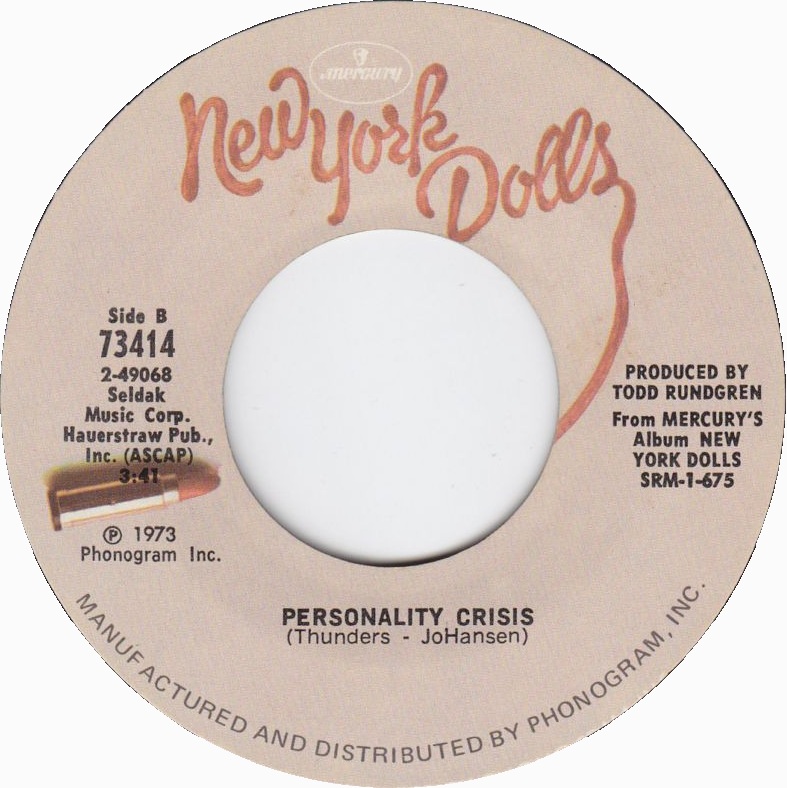
The New York Dolls’ eponymous debut was released in the summer of 1973 and, somewhat predictably, was just as divisive as everything else involving the band up to that point. The opening track, “Personality Crisis,” served as a statement about the difficulties of duality: the fine line between male and female, love and hate, sane and insane. Or maybe that’s reading too much into a simple teenage angst anthem.
New York critics especially loved the record as the band spoke their hometown language, but the album didn’t play in Peoria. A fine example of the extreme divide the band engendered is Creem magazine’s annual poll for best and worst band of the year: The New York Dolls won both awards in 1973.
None of the group’s singles ever charted and they broke up in an explosion of acrimony after their second album. But if any band embodied the phrase, “Live fast and die young,” it was The Dolls.
So be someone who counts… with The New York Dolls.
 1 2 3 o' clock 4 o' clock Rock