“There are three sides to every story: your side, my side, and the truth. And no one is lying. Memories shared serve each differently.”
― Robert Evans, The Kid Stays in the Picture
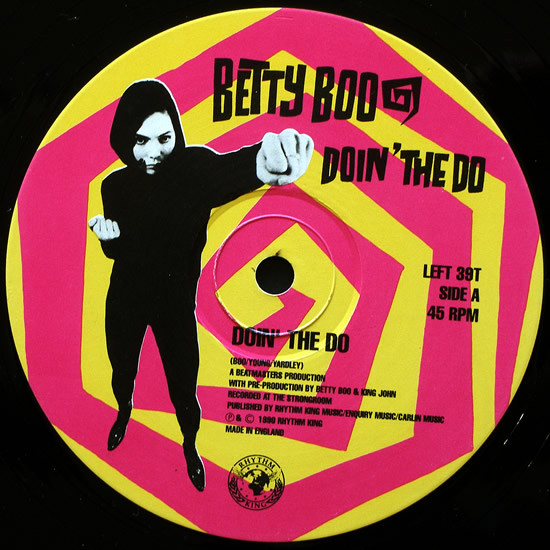
This quote is why police detectives, parents with multiple kids, and historians have a hard time parsing what to believe. Perception is personal; memory is fallible (or self-serving). Sometimes you have to take your best guess as to what happened based on your source information. Or, if you’re a writer, take the easy way out, present both sides, and leave it up to the reader.
Alison Clarkson grew up in London and knew she wanted to do something with music. At the age of 17 she performed as part of an all-girl rap group called The She Rockers, gigging around the city, when American rap group Public Enemy spotted them and offered mentorship. Women rappers were still unusual in the late 1980s and Public Enemy, recognizing both the talent and the novelty, flew Clarkson and her group to New York to work in the recording studio and open some shows for them.
Public Enemy thought Alison possessed the star power to go solo and encouraged her to do so. Friends had always called her Betty Boop due to her large eyes and short, dark hair so Alison shortened the name, played up the cartoonish look and personality, and struck out on her own as Betty Boo.

Her first success came in 1989 as the featured vocalist on a huge UK hit by The Beatmasters called “Hey DJ – I Can’t Dance (To That Music You’re Playing).” She scored a record deal with Warner Bros. and the money she made from that single allowed her to purchase a keyboard, a sampler, and a four-track recorder.
According to Clarkson, she used this equipment to write a demo for a song titled “Doin’ The Do.” She laid down a beat, a keyboard part, a verse and a chorus. It sounds like the song was a fairly fleshed out demo.
But stories immediately diverge with the account of her co-producer on her debut album, Rex Brough. According to Brough, Clarkson only had the idea for “Doin’ The Do” in her head but nothing recorded and they built the song from scratch in his home studio using a sampler and a Commodore 64 (shout out to the Commodore 64, that most 80s of PCs). They constructed the song almost entirely from samples, but used very small bits and sometimes sped them up to alter the sound to the point of being unrecognizable (you would hardly know there’s a piece of “I’m A Believer” by The Monkees in there).
Now, is it possible that Clarkson simply demoed the song for herself but didn’t play it for Brough? Sure. But it’s interesting to note that Clarkson’s version favors her as the creative force and Brough’s version favors him.
Either way, when released as a single in the spring of 1990, “Doin’ The Do” reached the Top 10 on the UK pop chart and #1 on the US Dance chart. And a hit song is the only truth that matters.
So if you can’t take the heat, get out the kitchen… with Betty Boo.
 1 2 3 o' clock 4 o' clock Rock