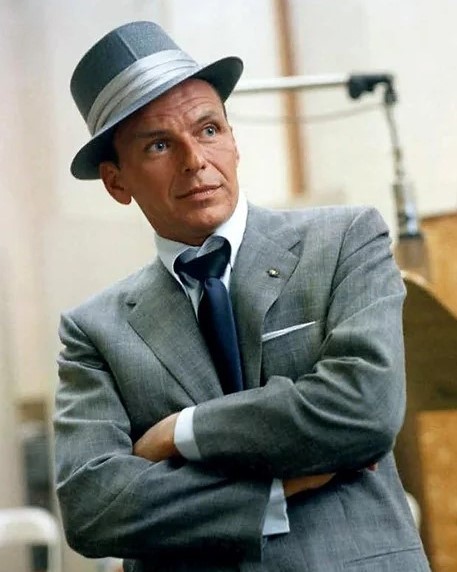
The Chairman of the Board. Ol’ Blue Eyes. The Voice.
Sinatra.
Francis Albert Sinatra hated rock & roll.
But rock & roll didn’t hate Frankie. From Elvis Presley to Jim Morrison, from Bruce Springsteen to Elvis Costello, all were indebted to the Titan of Torch, the King of Ring a Ding Ding. His voice was ubiquitous: on the radio, on the turntable, on TV and in the movies. Everyone’s parents in the 40s and 50s owned at least one Sinatra record. He appealed to men and women, young and old — the one-man Beatles of The Greatest Generation.
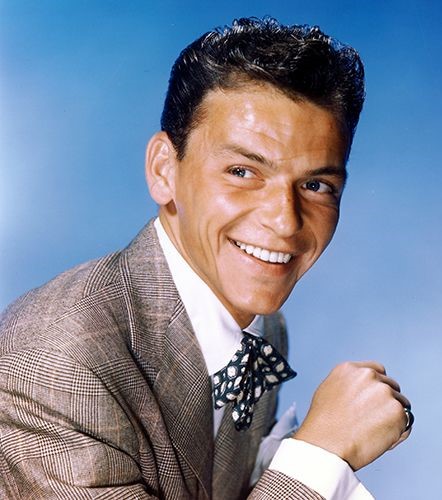
And like The Fab Four, Sinatra inspired mania and pandemonium. During one concert in New York City in 1944, tens of thousands of his fans (almost entirely made up of teenage girls nicknamed “bobby-soxers” due to their fashionable sock of choice) rioted outside the theatre when they couldn’t get tickets. When Sinatra crooned, the bobby-soxers swooned.
In the 1950s, Frank moved to Hollywood, picking up Oscars for acting and actresses for marrying. Capitol, his new record label, made their home right in the heart of the city and the skinny kid from the East Coast soon became California royalty. Rock & roll would eventually overtake him, but he always remained The Voice.
Whether you’re a a puppet, a pauper, a pirate, a poet, a pawn or a king… here’s the least you need to know:
The Columbia Years (1943-1952) The teen idol. The records that launched Frank into the hearts of millions during WWII and the immediate post-war years. From a 21st century perspective these recordings need to be heard for historical reasons (maybe a few tracks to give you the gist), but artistically he would soon eclipse this period.
The Capitol Years (1953-1962) The swingin’est man in town. Peak Sinatra — he’s got the world on a string, sitting on a rainbow. The majority of his best known songs come from his time with Capitol and any compilation of any size from these years is worthwhile. With impeccable production and arrangements, Frank takes phrasing where it’s never been before and his Columbia recordings sound old-fashioned by comparison. One should also be familiar with In The Wee Small Hours, a concept album about loneliness which would prove highly influential. His songs liven up cocktail parties or sadden your heart: either way, he knew exactly how you felt.
The Reprise Years (1961-1983) The elder statesman. Frank starts his own record label and turns it into a huge success, initially with his Rat Pack buddies but eventually with such rockers as The Kinks, Jimi Hendrix, and Neil Young. His own consistency waxes and wanes during these decades, but he can still knock out classics (perhaps a touch more schmaltzy), including two #1s (his only chart-toppers on the Hot 100).
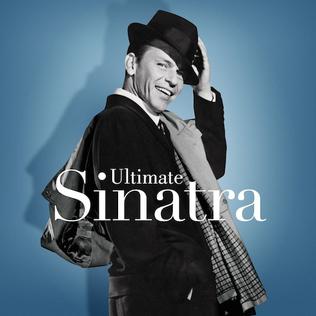
Ultimate Sinatra: The Centennial Collection One-stop shopping covering all his eras. At 105 songs, is it too much for someone only trying to attain a basic knowledge? Probably. Ideally you’d want a one or two disc set, but getting multiple labels to release music under one title usually takes a miracle (and a lot of contract negotiations) so there aren’t a lot of multi-label comps out there. For anyone totally unfamiliar with Sinatra who just needs the tiniest of tastes, there’s also a single disc compilation of Ultimate Sinatra — some of the omissions are questionable, but for the sake of history it’s a good place to start in order to cover multiple decades and to learn why he was called The Voice.
 1 2 3 o' clock 4 o' clock Rock
A voice so so so very smooth. Hard to beat this version of New York.
I love his combination of insouciance and melancholy. And the way he plays with drawing out notes and moving them around is fascinating, like a jazz musician.
An unbeatable voice. And he had the best songwriters and arrangers at his side. It doesn’t get much better than that. I forgot how bluesy he gets in That’s Life!
Drake
Frank is kind of like Elvis where you hear his songs in bits and pieces all the time and almost take him for granted. But then when you do some concentrated listening you remember he’s amazing!
If my memory is correct, Frank went with a different, younger arranger for That’s Life in order to sound more contemporary. It worked and he had a bunch of hits around that time.