
There’s a long history of artists expressing displeasure with their record company, especially after their contract expires. But very few immediately burn their bridges by recording a blatant and vitriolic song about their former business paramour.
Hell hath no fury like a writer with a grudge.
Graham Parker began playing gigs in mid-70s London right about the time pub rock started its decline and punk began to ascend. His manager, the well-connected Dave Robinson, helped him put together a backing band of former pub rock all-stars who would soon be dubbed The Rumour. Although Robinson co-founded Stiff Records, Parker did not sign with Stiff — his records were released on Vertigo, except in the US and Canada, where they appeared on Mercury.
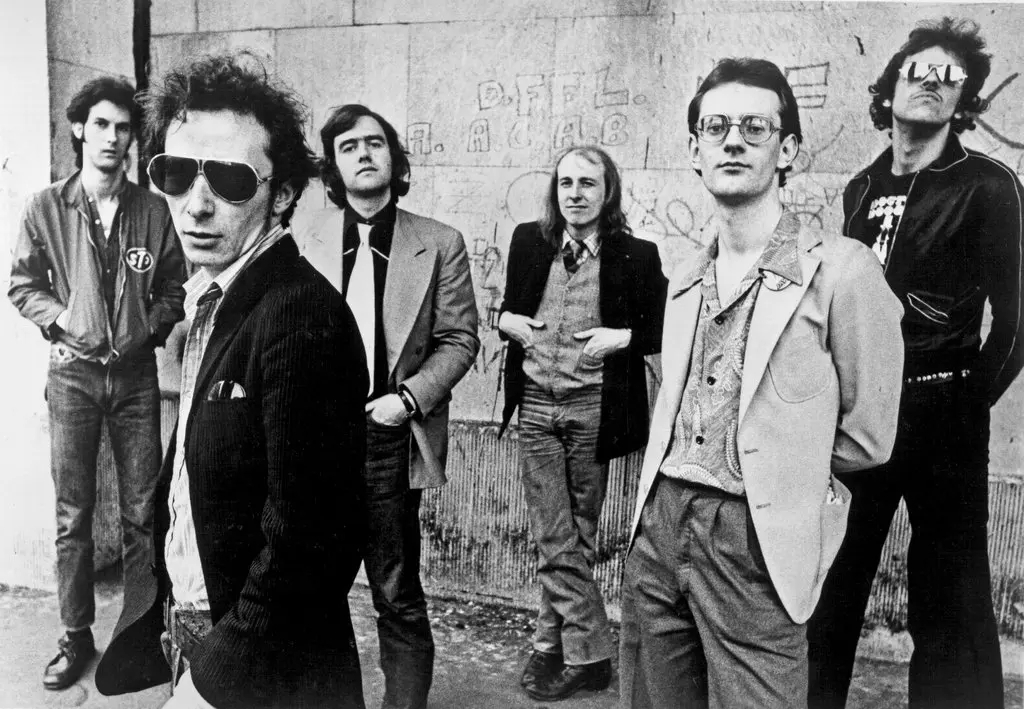
Parker’s first few albums received praise from all quarters, particularly in the US, where Rolling Stone and The Village Voice both consistently ranked them among the year’s best. Alas, the encomiums did not translate into sales or hits and Parker’s frustration grew with each subsequent failure to break into North America. Elvis Costello and Joe Jackson, the two artists he most often received comparisons to, had managed to find success in the former colonies, so what was the problem? C’mon, major record label!
Entertaining no notions about signing with Mercury again once he fulfilled his contract, Parker instead struck a deal with Arista and promptly went into the studio.
Among his first recordings was a song called “Mercury Poisoning,” a not so subtle attack on his former label which he and the band tore into with gleeful ferocity. The emotion behind the song was serious, but the tirade was also a bit of silly fun, and Parker didn’t take the song itself seriously enough to consider it for his next album. Mostly, it served as a way to rant and let off some steam. But he still wanted people to hear it.
“Mercury Poisoning” was originally intended for the B-side of a single, but since Parker was still signed to Mercury’s sister label in the UK, pressure was exerted to make it a quieter release. In the US, about 200 promo copies were pressed in February of 1979 and in the UK it came out as an anonymous single. It proved popular enough that Arista included a free copy of the single with Parker’s next album, released in March, titled Squeezing Out Sparks.
So take it to the real ballgame… with Graham Parker and The Rumour.
Squeezing Out Sparks is generally considered Parker’s best album, a tight and tuneful collection of sharp-edged rock & roll. It contains his signature song, “Passion Is No Ordinary Word” — recorded during the same sessions as “Mercury Poisoning” — and based on that earlier song, you know this title is a sentiment he absolutely believes in:
 1 2 3 o' clock 4 o' clock Rock
And now musicians find their way through YouTube and streaming platforms. Times, they are a’changing.
Happy Christmas, Houston. We’re on our way to Bogota.
And a very Merry Christmas to you! Have a lovely time in Bogota.