When you hear the phrase Southern Rock, its natural to think of the originators, the long-haired, bearded and mustachioed giants of the genre from the 1970s: The Allman Brothers Band, Lynyrd Skynyrd, The Marshall Tucker Band, Black Oak Arkansas. These denim-clad bands often had 7 or 8 members, loved whiskey and drugs, and steeped themselves in the blues. But everything changed with the coming of the next generation.
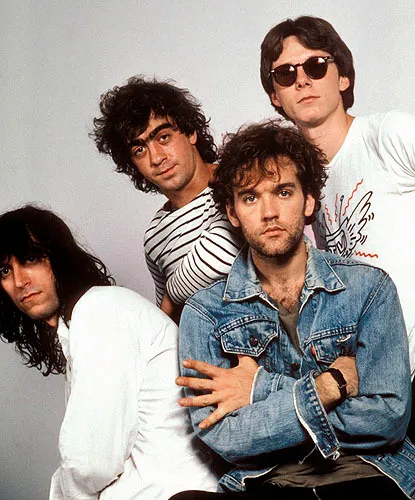
R.E.M. formed in Athens, Georgia in 1980 while attending the local university. Singer Michael and guitarist Peter shared a mutual love for non-mainstream acts like the Velvet Underground and Patti Smith, but also for the bubblegum pop of The Monkees. Bassist Mike listened to 70s classic rock and AM pop, while drummer Bill dug UK punk and good old fashioned rock & roll. The foursome began playing in an abandoned church and the amalgam of all these influences sounded nothing like the individual influences: they immediately sounded like R.E.M.
The band became critical darlings with their debut album, but mainstream success came in incremental steps, partially because of their refusal to compromise. Michael Stipe’s lyrics were striking but opaque, his vocals purposefully mixed low, making them even harder to decipher, and the band generally refused to lip synch in their music videos (sometimes barely appearing at all).
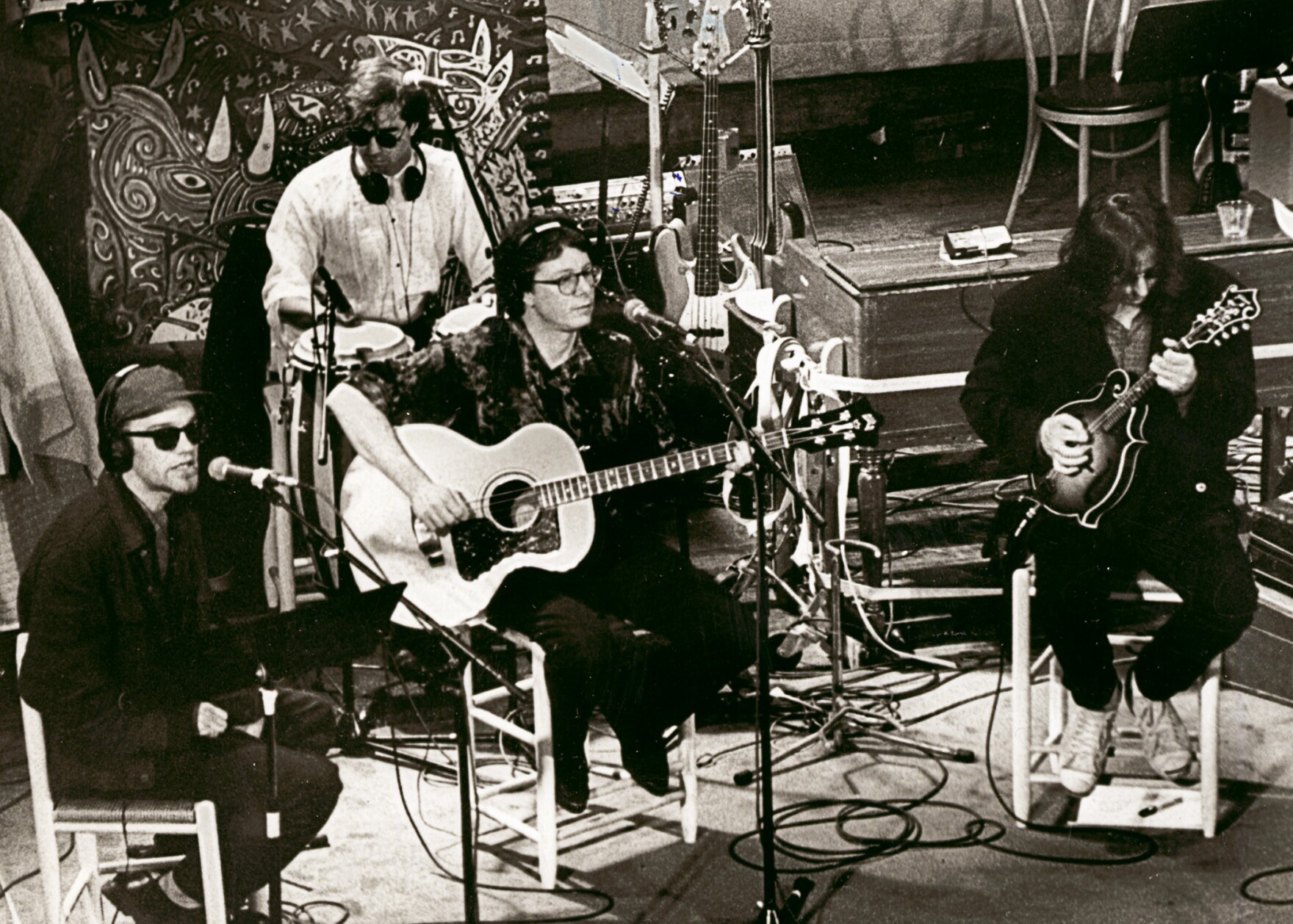
But the group toured relentlessly at clubs, college campuses, and theaters. They built a following slowly, by word of mouth, primarily through kids who listened to the burgeoning college radio scene, which gained popularity partly because of R.E.M. themselves, who remained an underground band until they finally had their first hit in 1987.
They continued to have bigger and bigger hits after that, and when they began filling stadiums accusations arose of selling out, but the music had always been accessible. R.E.M. were still an “alternative” band, what changed is that they simply allowed themselves to open up and make themselves a little more emotionally accessible. Which turned them into one of the biggest bands in the world.
Feeling pretty psyched. Here’s the least you need to know:
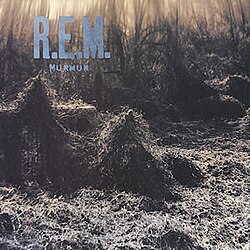
Murmur (1983) On the short list for greatest debut albums in rock history. In a musical landscape filled with synth-pop and mainstream rock, R.E.M. sent forth a record that was mysterious, yearning, odd, and yet you could dance to it. Nothing else sounded like Murmur.
Document (1987) The mainstream breakthrough. A little tighter, a little slicker, a little more muscular. Their previous albums contained alternative college rock classics — Document provided their first two mainstream radio rock classics. Leo-nard Bern-stein!
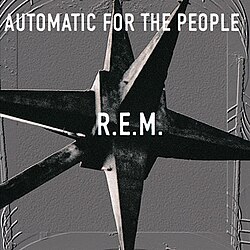
Automatic For The People (1992) The height of their powers. A little sadder, a little darker. Mixing shadows and light, gritty and pretty, inscrutable and direct. It shouldn’t have been huge — it was huge.
Part Lies, Part Heart, Part Truth, Part Garbage (1982–2011) A two-disc overview of the band’s history, made up of singles and key album tracks. Does it spend too long on the later years? Indeed it does. But there are no other compilations which combine the indie years and the major label years so this one has you covered.
 1 2 3 o' clock 4 o' clock Rock
Gosh, it’s good to hear those songs again. Losing My Religion is a masterpiece imo.
Excellent post, Houston.
Thank you! I always liked R.E.M. but after many years of listening to them, one day I suddenly realized, “Oh! This is actually one of my favorite bands.” Their early records have so much energy and still sound fresh today, and their masterpieces are timeless.
I agree! REM is one of those bands that will always sound great.
I became familiar with them through their big hits in the late 80s but it’s really the lesser known songs like “Fretless” or “Swan Swan H” that hooked me.