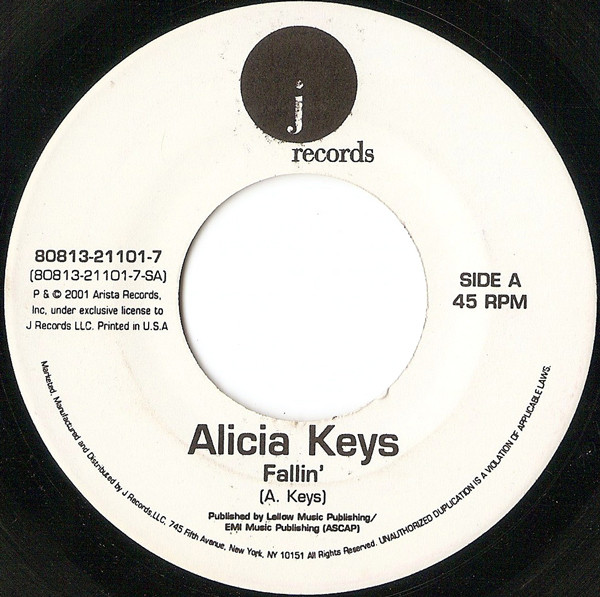
Alicia Keys has been a music superstar for the past 25 years, from the moment her first album dropped in 2001. No way a record company could have messed that up, right? Just leave her alone to sing and play piano while you sit back and watch the hits and the money roll in.
Right?
Alicia Keys began playing piano at the age of six, studying classical music and playing her little heart out for up to six hours a day. By her teens she had expanded into jazz, pop, and R&B, and started composing her own songs while attending a performing arts school in New York. Keys formed a trio with two other girls and they began playing gigs around the city, eventually catching the ear of a manager who put her in touch with a record executive. Unfortunately, said record executive was in the process of switching labels and couldn’t sign her.
Instead, a bidding war broke out, which Columbia Records eventually won. And Columbia had a plan.
We’re in the mid-90s at this point, and teen R&B pop singers such as Brandy and Monica are scoring Top 10 hits and selling millions of records. The thinking was, Keys could easily ride that wave of popularity. And to see that thinking come to fruition, Columbia hired a team of stylists, producers, and songwriters to mold her in that pop image.
But that’s all they wanted. Her voice and her image. Input, they did not want.
Unfortunately for their plan, Keys didn’t like the producers, she didn’t like the songwriting choices, and she didn’t want to be some kind of manufactured pop princess. So she invested in a home recording setup and began writing and recording demos of her own songs, produced her way, without any interference from the label.
Columbia rejected the demos as not radio-friendly.

Keys then rejected Columbia as not artist-friendly and asked to be released from her contract. The label agreed and, crucially, thought so little of her music that they let her keep the demo tape (which they didn’t have to).
Clive Davis signed Keys to Arista — and then to J Records when he started his own imprint — and told her she could do whatever she wanted. So she kept working on her demos and turned them into her debut album, Songs In A Minor, which debuted at #1 on the US album chart in 2001. Most of the songs on the album were also on the demo tape that Columbia rejected as “not radio-friendly,” including the first single, “Fallin’,” which went to #1 on the Hot 100. Keys would go on to have three more #1 albums and three more chart-topping singles.
Every record label makes mistakes — the trick is to have more hits than misses — but there’s wrong and then there’s WRONG.
So start fallin’ back in love… with Alicia Keys.
 1 2 3 o' clock 4 o' clock Rock
Good for her, and even more so — good for us who love listening to her. And this song in her hands is brilliant.
Very brave of her to have enough faith in herself to reject where she was being pushed. Most people probably would have bowed to the pressure for fear of losing their chance to make their first — and possibly only — record.
I have always loved this song.