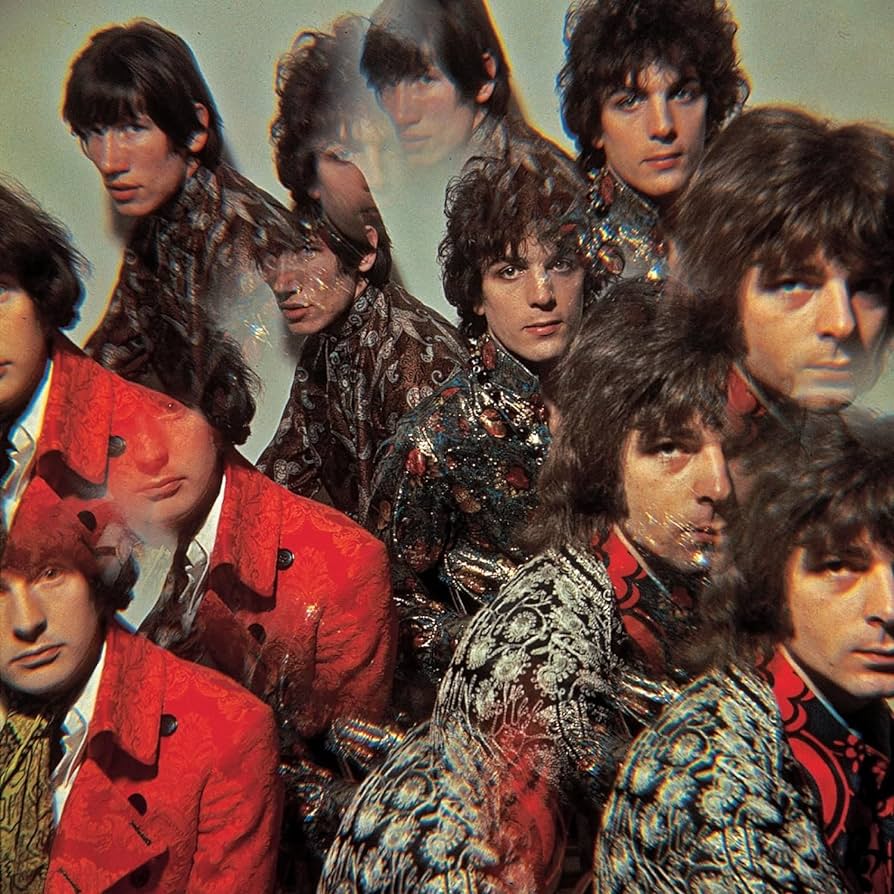
“Which one’s Pink?”
The old guard of the pop press could be quite condescending with new acts, but if anyone in Pink Floyd could figuratively lay claim to the name (at least initially), it was the mad genius known as Syd Barrett, who would, in fact, later go mad due to a combination of mental health issues and an excess of Swinging Sixties. As it’s been noted, the decade had its groovy trips through the looking glass, but for some the ticket was one way.
Syd joined The Tea Set in 1965, a blues and R&B cover band which already contained bassist Roger Waters, keyboardist Rick Wright, and drummer Nick Mason, a trio of would-be musicians who had all met in the same class at architecture school. At a concert booking featuring multiple bands, another act with the name Tea Set opened the show, and Syd hastily redubbed his own group The Pink Floyd Sound. It was the perfect time on the music scene to start getting a little weird and the name stuck.
Within two years the covers fell out of favor, and now only Syd’s unique and surreal songs appeared on the setlist — married with the spaced out, tripped to the nines, echo-laden sound of the music, Pink Floyd became the toast of hip, underground London. They soon found themselves at EMI Studios, recording their debut album in the room next door to The Beatles while the Fabs finished up Sgt. Pepper.
The Piper At The Gates Of Dawn reached the Top 10 in the UK, but Barrett was already out in the stratosphere and his increasingly erratic behavior saw him ejected from his own group shortly after the release of their debut album. As the driving creative force for the band, both as a songwriter and guitarist, Pink Floyd’s future appeared decidedly in doubt.
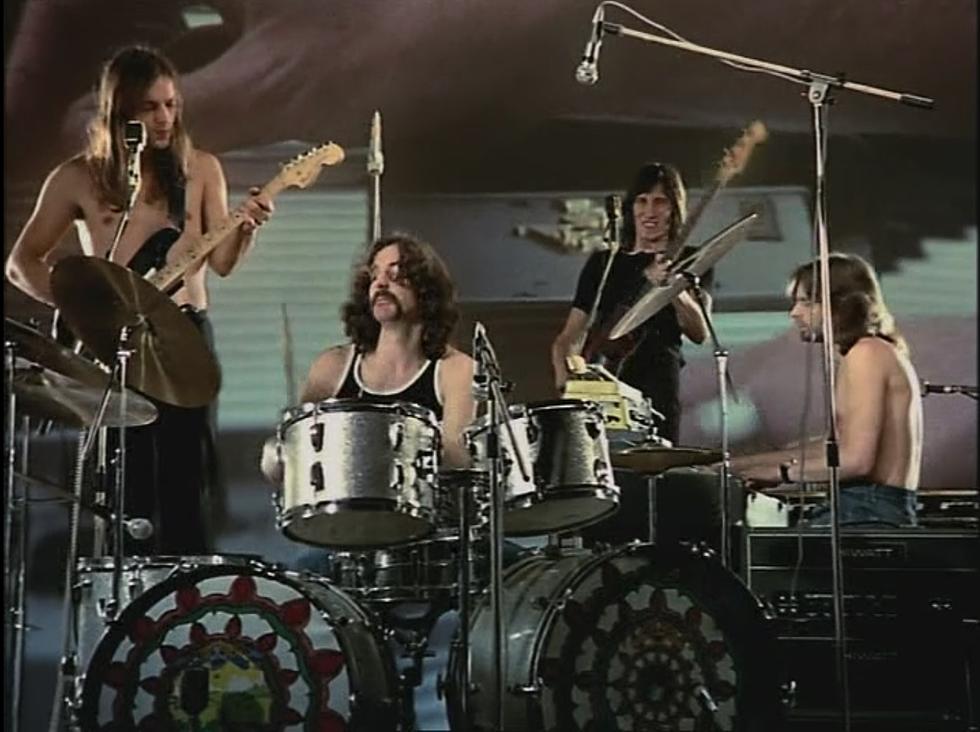
In a stroke of good fortune, Syd’s best friend, one David Gilmour, also happened to play a pretty mean guitar. He joined the group, emulating Syd’s sound, and all the members pitched in on songwriting going forward. Eventually, Roger Waters took the lead, and his vision led to hits and platinum albums and established Pink Floyd as a major contemporary rock band, not a strange, experimental group from the lysergic 60’s. But even though the sound was modern, the subject matter always looked back to the past.
Set the controls for the heart of the sun. There’ll be no more Aaahhh! Here’s the least you need to know:
The Piper At The Gates of Dawn (1967) The debut. Idiosyncratic psychedelia. The twisted nursery rhyme pop of the acid-headed. Adventures In Wonderland as narrated by the Mad Hatter.

The Dark Side Of The Moon (1972) Not only the least you need to know for Pink Floyd, but the least you need to know for the history of rock. The culmination of everything the band had been trying to accomplish for the previous five years and an object lesson in how to blend the experimental and the accessible. (Also necessary to know The Dark Side of The Rainbow. A happy discovery by someone in the early 90’s, it’s the title that describes the unintentional synchronicity that occurs when you play the album over the first half of The Wizard Of Oz — press play after the MGM lion roars for a third time.)
Wish You Were Here (1975) A tribute to Syd and a condemnation of the music business. An outpouring of love, guilt, anger, and sadness. “We’re just two lost souls swimming in a fishbowl…” has since appeared as a quote in thousands of high school yearbooks.
The Wall (1979) A towering double-album rock opera intermingling WWII, childhood, rock stardom, masonry, fascism, jurisprudence, and pudding. The basis for nearly 50 years of epic concerts. And a very trippy movie to boot.
Here’s the band’s second single — the most successful with Syd — which also featured as the opening track on the US version of Piper:
Here’s a few more to help you think Pink:
“The least” could lead to contention here so…a little explanation. The Story doesn’t actually tell the story of an artist — that’s what Wikipedia and books are for. It’s really about the least you need to know if you’re a fledgling music geek, a non-fan of the artist, coming in with no knowledge, and what knowledge you need to acquire in order to have basic conversations with other music geeks. This is all highly subjective, of course, but if any Pink Floyd fans are wondering why I left out Meddle or Animals, it’s because I really try to get down to the very least (sometimes I cut too much, sometimes not enough). The choices are made for historical, creative, or commercial reasons. Meddle and Animals are great, but it wouldn’t cause embarrassment if you weren’t familiar with them; however, people might question your credentials if you didn’t know Dark Side or The Wall. That’s my story and I’m sticking to it.
 1 2 3 o' clock 4 o' clock Rock
This was fantastic and I knew none of it until just now!
Dark Side was the soundtrack to our lives for our weekend nights during the early 70s and I wrote a story about that period called “Great Gig In The Sky”.
Thanks for a terrific read and fab music, Houston!
Always happy to be informative! Dark Side is still amazing. It sounds unlike anything else of the time and even after listening to it for decades it still sounds fresh. I’ll bet those were great weekend nights!
They were great at the time, which is how it should be. Then we became centered, had a new set of priorities and settled down. No regrets, Houston.
No regrets is the best result.
Dark Side of the Rainbow — that takes me back! We were probably 17 when we watched it. Haven’t thought about that in a long time! It is uncanny how well the album lines up with the film’s visuals.
I saw Rogers Waters in Toronto, ON in 2012 during The Wall Live tour! Went with my folks and my then-boss. We went out for a pint after the show, and my boss ordered calamari. For whatever reason, I remember that detail clearly — and now I associate Pink Floyd with calamari, LOL. Haven’t listened to them in a while, so I thoroughly enjoyed your selections.
I was probably about the same age when I first watched it. It really is freaky how well they match up. I might play that this weekend!
That concert must have been epic. I’ve been lucky to catch quite a few artists from before my time but that’s one I’m sorry to have missed.