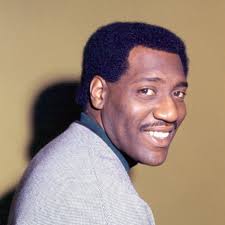
It’s an ancient adage, dating back thousands of years: “Whom the gods love, dies young.” So it’s no surprise they wanted Otis. Everybody loved Otis.
Otis Redding Jr. hailed from Macon, GA and began singing almost immediately, first in church as a young boy, then in teen talent contests on the radio (which he almost always won), until he was spotted by a guitarist named Johnny Jenkins, who gave him a job fronting his band.
In 1962, Jenkins scored an audition with Stax Records and Atlantic in Memphis. Redding drove him there and hung out in the studio, just a bystander, but after the audition he was asked to sing a couple of songs. That impromptu session got him a contract and he never looked back.
Redding went on to spread the new style of R&B known as soul. He initially gained fame for his ballads (earning the nickname Mr. Pitiful), but soon began to pick up the pace, taking inspiration from the British Invasion rockers, and even tackled their uptempo songs, performing “Day Tripper” by The Beatles and “Satisfaction” by The Rolling Stones at breakneck speeds.
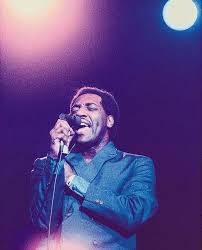
The Monterey Pop Festival in the summer of 1967 saw Redding sharing the stage with the new wave of rock stars: Janis Joplin, The Who, Jimi Hendrix. His soulful, energetic performance connected with the burgeoning hippie crowd — “This is the love crowd, right?” — and cemented his status as a star. Earlier that year, Aretha Franklin had taken his song “Respect” to #1. And “Sweet Soul Music,” which he co-wrote with singer Arthur Conley, peaked at #2 shortly afterwards. He was on top of the world.
The fall of 1967 saw Otis back in the Bay Area while on tour. He stayed on a houseboat and enjoyed watching the ships sailing past, marveling at how far he had come since his boyhood in Macon. He began to write the lyrics to a song and then collaborated with Stax session guitarist, Steve Cropper, on the music. Redding had a basic version completed in the studio on December 7th but considered the recording unfinished.
Three days later, the small plane carrying Otis to his next concert destination crashed into a lake in Wisconsin. He and four members of his backing band, The Bar Kays, were killed instantly. The song he’d been working on, “(Sittin’ On) The Dock Of The Bay,” became a posthumous #1 in 1968.
The gods could wait no longer.
Boys will come a dime by the dozen, but that ain’t nothing but ten cent loving. Here’s the least you need to know:
Otis Blue: Otis Redding Sings Soul (1965) He sure does. Otis helps change the course of R&B with raw energy, emotion, and a trumpet section. What you want, baby he’s got it.
The Best Of Otis Redding One of the few artists for whom it doesn’t matter what compilation you pick up. You can’t go wrong.
 1 2 3 o' clock 4 o' clock Rock
Back from hols in France, and catching up. Hope you’re well.
A great loss. That song was one of my favourites for a long time.
My mother thought it was one of the most beautiful songs she’d heard in a long time, which I remember as a teenager, came as a great surprise that she’d like a song that I also liked. LOL!
A holiday in France sounds lovely, especially to one such as I who has yet to go there. Someday.
It’s nice that you and your mother could bond over “Dock Of The Bay” as it is such a wonderful song. It could have ended up much different since Otis considered it unfinished and there was talk of a gospel choir and possibly horns. It might have been a much bigger production.
I don’t think it would’ve had the same impact on me had it been a large production. There was something about the solitary “lone wolf“ feeling that, as a teenager, was very appealing to me.