
Folk music. Music of and by the people. Folk purists in the 1960s and 70s spent a lot of time debating about what was and wasn’t folk and they held decidedly strong opinions on the matter. In general, the older the better — they were leery of anything contemporary should it prove less than authentic.
The song we’re looking at today certainly sounds like ye olde authentic folk, and it’s been recorded by some unquestionable legends in the genre, but it’s not as ancient as one might think.
“The Auld Triangle” (you’ll see it under various spellings, and sometimes entirely different titles) was written by one Dick Shannon, who first performed it on Irish radio in 1952. Very little information exists about Shannon, except that he was a drinking buddy of hard-living, hell-raising playwright Brendan Behan, who used the song in his very first play, The Quare Fellow, in 1954. Behan wrote the play about his time in Dublin’s Mountjoy Prison, incarcerated therein as a member of the IRA (one who had discharged a firearm in public near a couple of policemen), and not his first time in jail as a young man.
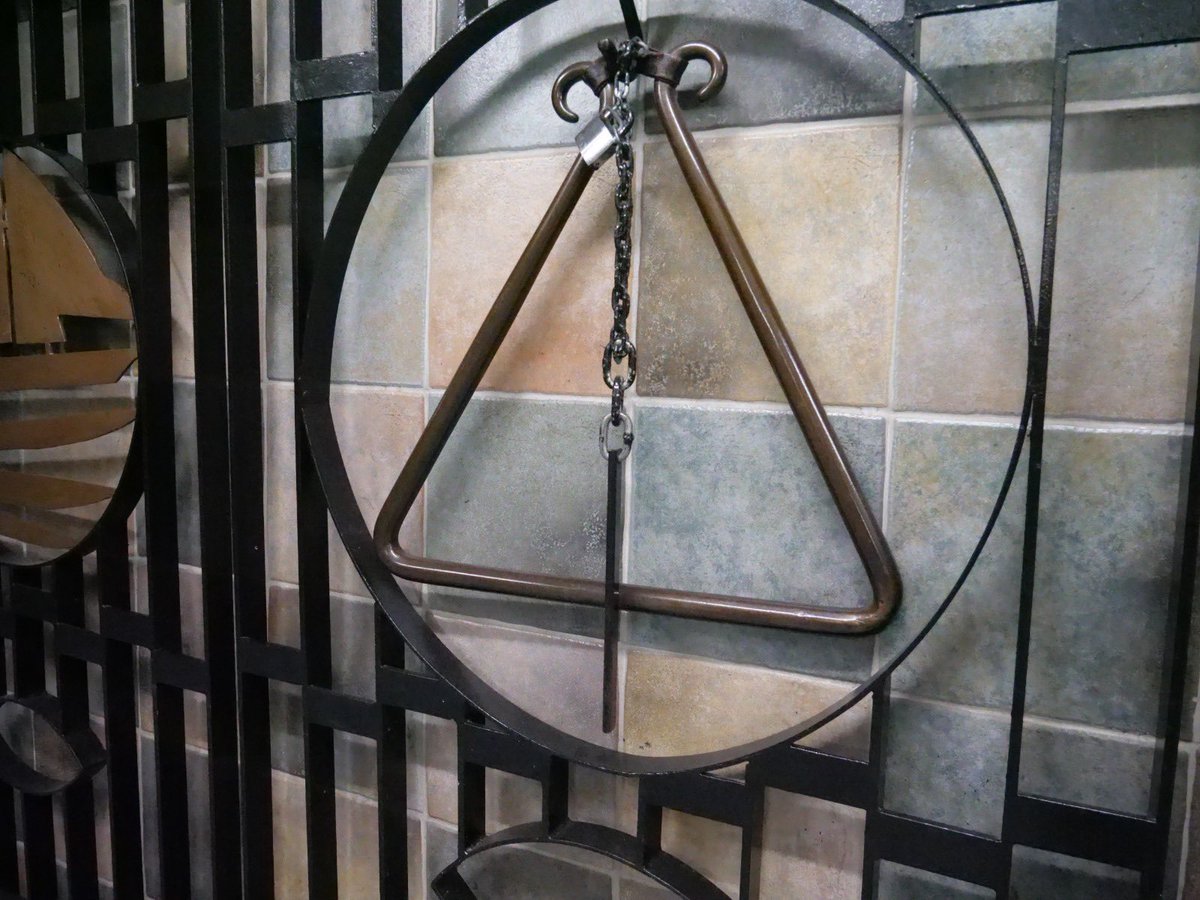
Shannon’s song is also about Mountjoy Prison — specifically, the large triangle within that served as a ringing wake up call every morning. It’s not recorded if he ever spent time inside its walls, but the prison would have been a dominating sight in the city, a landmark overshadowing all who passed by. Shannon worked for Behan’s father for a time, which is how the two met, and at some point he must have played “The Auld Triangle” to the budding playwright (or perhaps the playwright’s own experiences inspired its writing). The song eventually became so associated with Behan, not only through his play but also his own recording of it in 1960, that many assumed he’d written it (or that it was a Traditional song he’d dug up somewhere).
“The Auld Triangle” would subsequently be covered in the 60s by Ian & Sylvia, The Clancy Brothers with Tommy Makem, and The Dubliners (and many more over the ensuing decades, including The Pogues). So by the time The Liverpool Fishermen tackled the song in 1971, it was already a folk standard, particularly in the Irish folk scene.

The Liverpool Fishermen comprised the three Jacques brothers, who handled the vocals, and eventually included another three members who played instruments. All six hailed from Liverpool and claimed Irish descent. All were working class folk who held down other jobs, but singing around the pubs and clubs was fun and provided some extra coin (when they weren’t paid in Guinness). The group’s own promotional material stated they performed at “wakes, weddings, Irish fights, folk clubs, [and] French TV.”
They made one album for Mushroom Records in 1971, titled Swallow The Anchor, which featured a mix of traditional folk, original songs, and their version of “The Auld Triangle” (spelled “Ould” in this case). While other interpretations are often very slow, or sad, or reverent, The Liverpool Fisherman sound very down to earth, regular fellas who might have downed a few pints in the pub (or illicitly smuggled a little hooch into the prison), and are now singing their Irish hearts out.
The authenticity rings true. Like a triangle sounding across a Dublin courtyard.
(This is only the second or third time I haven’t been able to find a song on YouTube, which is somewhat surprising considering even the most obscure of obscurities can generally be found there. But no matter, I’ve embedded my own copy.)
 1 2 3 o' clock 4 o' clock Rock
I love Cornish sea shanties, and this is very similar. Good that you had a copy to upload.
Oh, I have copies of everything I write about! And I, too, love a good sea shanty. The brinier the better!