Making it as a band is hard — we’ve established this — despite the fact that most people generally like music and, therefore, generally like bands.
Now try making it as an experimental musical street theater troupe.
Impossible, you say?
You are mostly correct. But one managed to succeed, against the mightiest of odds, and left their mark upon the world in two different incarnations.
Richard Elfman founded The Mystic Knights of the Oingo Boingo as a surrealist theater group in Los Angeles in 1972. By 1974, his little brother Danny had joined the group as musical director, and what was once strictly a troupe of actors became more of a music revue performance art group. Players came and went, so the conglomeration contained anywhere from 10 to 15 people at a time and employed all manner of instruments to deliver their quirky interpretations of everything from old Cab Calloway numbers to Balinese gamelan music.
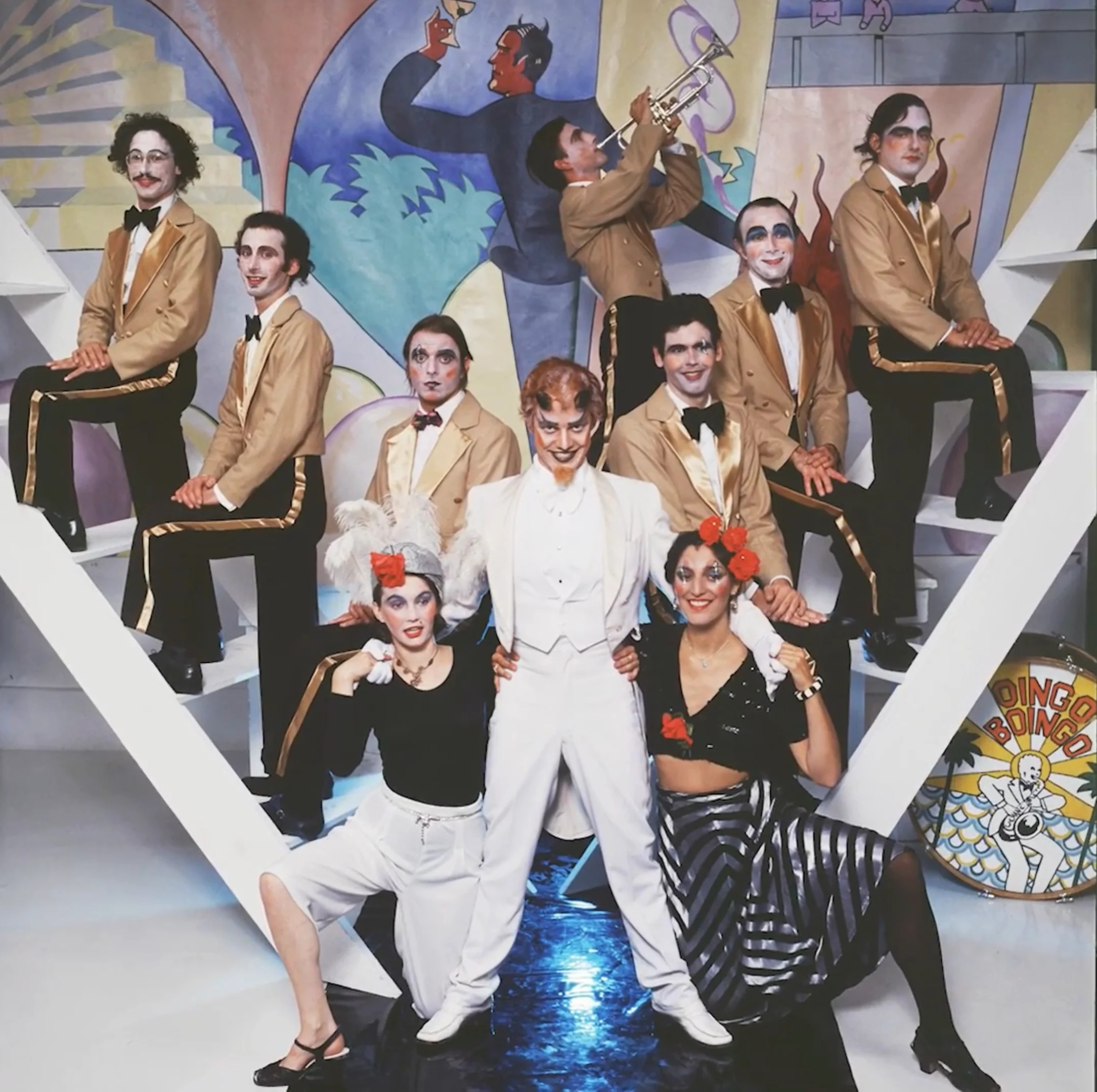
Over the next couple of years, The Mystic Knights of the Oingo Boingo gained enough of a following to get themselves off of the street and into venues with actual seats. They reached their peak of popularity in 1976 after appearing on — and winning — the low-budget comedy talent show known as The Gong Show.
The group released a couple of failed singles, but were unable to capitalize on their televised success. In 1979, inspired by the energy of the Two-Tone ska and new wave music coming out of the UK, Danny Elfman decided to make a drastic change.
Out with the extraneous members. Out with the old jazz tunes and world music. Out with The Mystics Knights. The new-look lineup would exclusively play rock music and they would play it under the abbreviated, ready-for-the-80s name, Oingo Boingo.
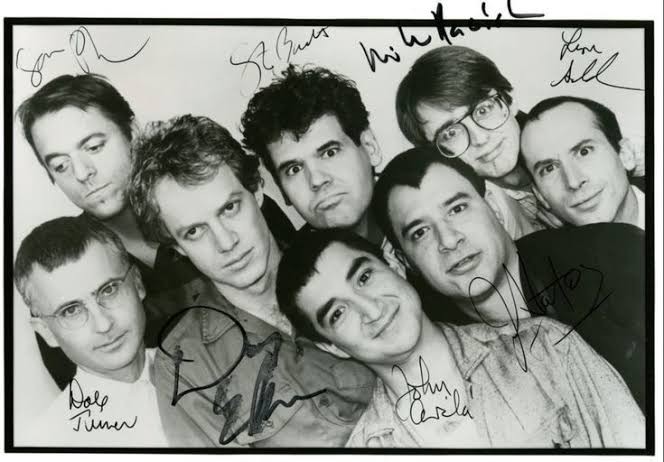
The move worked out initially as the band released a well-received single and signed with A&M Records, but after a few years of trying to find their footing, the label dropped them and the group went on hiatus. When MCA signed Elfman alone to a deal, most of Oingo Boingo still worked on his 1984 solo record, and the band reformed to record 1985’s Dead Man’s Party, their most pop-oriented album to date.
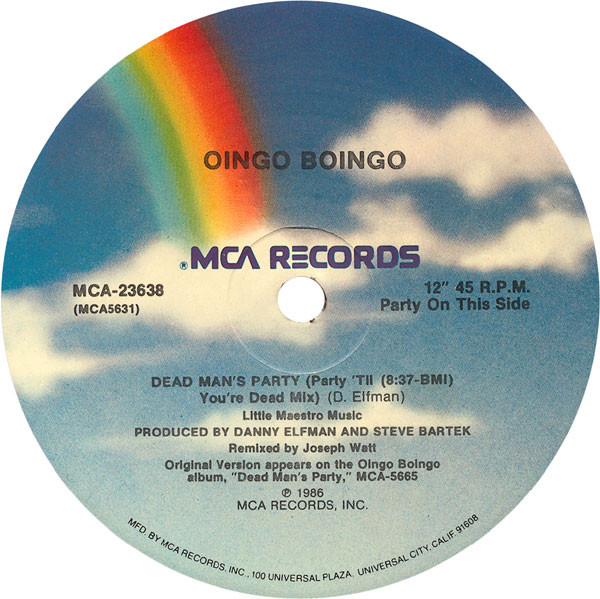
“Weird Science,” the lead single from the album became their biggest hit and served as the title track to the John Hughes movie. But the album’s titular track, “Dead Man’s Party,” although not a hit at the time, became a modern Halloween standard. Fitting, since it’s based on the early 20th century supernatural story, “The Bus Conductor,” about a hearse driver who serves as a modern day Charon, always willing to squeeze in one more passenger.
1985 was a busy year for Elfman. Director Tim Burton asked him to score the movie Pee Wee’s Big Adventure — despite the fact that Elfman didn’t know the first thing about scoring — and that led to a decades-long collaboration between the two. Steve Bartek, lead guitarist of the band since the days of The Mystic Knights, joined the party and orchestrated all of the movies Elfman would go on to score.
So leave your body and soul at the door….. with Oingo Boingo.
Let’s throw in “Weird Science” while we’re here — it’s in the spirit of the season:

