They pretend not to care, but even the coolest of indie labels want hits. And some are not afraid to put a little pressure on their artists in order to get them, just like the big bad corporate record companies.
The Boo Radleys formed in the late 1980s in their hometown of Wallasey, not far from Liverpool. Initially signed to Rough Trade, when that label disintegrated the band switched to Creation, home of shoegazers My Bloody Valentine and Jesus and Mary Chain.
Like their labelmates, The Boo Radleys preferred swirling, distorted guitars with hooks buried under the layers, and that’s mostly what they delivered with their first couple of albums, so the music world at large was somewhat shocked by their ambitious 1993 double album Giant Steps, which pared back the noise and allowed the pop hooks to shine through. But the group still traded in the experimental, shunning radio gloss, and the hooks were never driven home — they twisted away from repetition and the expected pop song rules.

Considering the band titled the album after John Coltrane’s landmark jazz record of the same name, it’s not too surprising that The Boo Radleys refused to compromise, insisting that the audience come to them, because they certainly weren’t going to chase after them.
Which made what followed all the more unexpected.
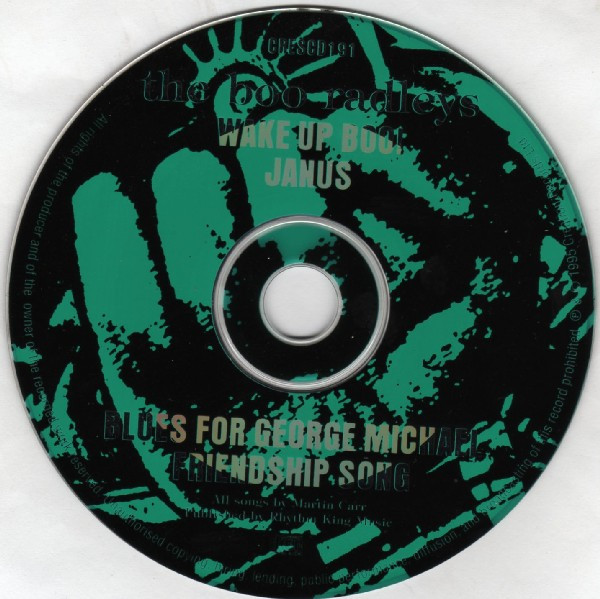
In 1995, the band’s fourth album was preceded by the up-tempo, horn-driven, ultra-catchy single, “Wake Up Boo!” Originally, the song was a little heavier, a little more wistful, and much more psychedelic, but Creation heard pop potential and leaned on the band to re-record the track in order to make it more radio-friendly. Britpop was blowing up and advantage could be taken.
It’s immediately apparent in the second version (inspired by Motown via The Style Council) that a more commercial vein has been tapped, but any accusations of selling out (and there were) are tempered by the lyrical content. Not a lot of radio hits end with a line such as “you have to put the death in everything.”
“Wake Up Boo!” exclaimed its way into the UK Top 10 in the spring of 1995, but the commercial success didn’t last long. The band took a hard left turn on their next album, which alienated their new fans and caused a divide among critics. They would break up by the end of the decade, but they made their record company happy, and in doing so, left behind a glorious blast of sunshine.
So wake up to a beautiful morning….. with The Boo Radleys.
Let’s throw in “Wilder,” the closing track from the album, a piano ballad which would have fit perfectly on a Keane or Coldplay album 10 years later:

