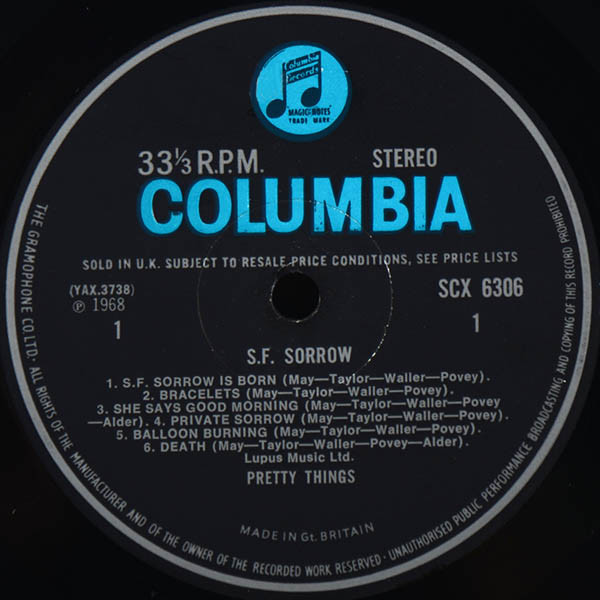
Though not oft-remembered today, The Pretty Things still have a few claims to fame. While perusing dusty history books in the pre-Internet days, one would always run across three outstanding facts about the band: prior to The Pretty Things, Dick Taylor co-founded The Rolling Stones but left because he received an acceptance to art college and there were too many guitar players in the group anyway; the band’s 1970 record, Parachute, was named Album of the Year by Rolling Stone magazine (an erroneous fact picked up and printed by many writers over the years); and the group recorded the first rock opera, pre-dating The Who’s Tommy by six months.
Let’s delve.
While deep in study at art college, Taylor met singer Phil May, who convinced the erstwhile guitarist to come out of retirement and give music another try. Together, they formed The Pretty Things (named after a Bo Diddley song) in 1963. A fellow student became their manager and scored them a deal with Fontana Records. All looked promising as the band recorded a couple of big UK hits in 1964 and 1965, but unfortunately they failed to capitalize on the British Invasion craze in the US and soon failed to further capitalize in the UK as well.
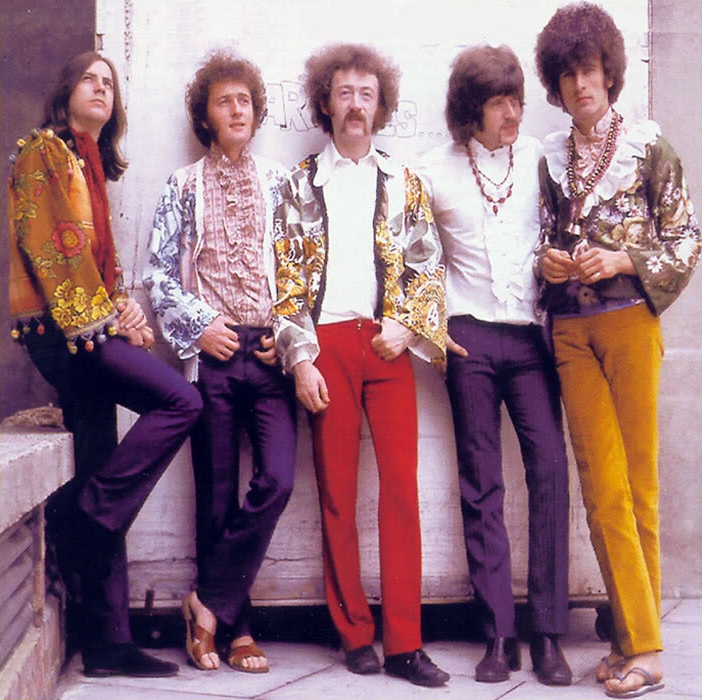
By 1967, The Pretty Things had fallen deeply in debt and were eager to part ways with Fontana. When their contract expired they signed with EMI on the Columbia label and went into the studio at Abbey Road with producer Norman Smith, former engineer for The Beatles and, at the time, producer for Pink Floyd. The band were excited about a fresh start and had an idea for something novel (so to speak).
When he wasn’t writing lyrics, Phil May wrote short stories and wondered why nobody had yet combined the two into a full album. Using one of his stories, titled “Cutting Up Sergeant Time,” as a jumping off point, May wrote a connected series of songs about a young man named Sebastien F. Sorrow who’s born, goes to work in a factory like his father, falls in love, goes to war, emigrates to America, loses his love in a tragic balloon explosion, examines his life in a “ghosts of Christmas past and future” type of experience, and finally goes mad.
Like most rock operas, the story sometimes lacked clarity and the ending for this one in particular seemed ambiguous and bleak. Released in December of 1968, S.F. Sorrow and its accompanying singles made everyone sad: the public, the band, the record company. Few bought the album, relations with EMI were strained, and The Pretty Things had to resort to making stock music for films under an assumed name just to bring in some extra cash.
Taylor left soon afterwards, but May carried on and the band attracted a solid cult following in the 70s. S.F. Sorrow just needed some time and today is considered a classic English psych-rock record. Making history doesn’t necessarily make you any money, but it does make you timeless. Something to be happy about.
So spend the sunlight of your days… with The Pretty Things.

